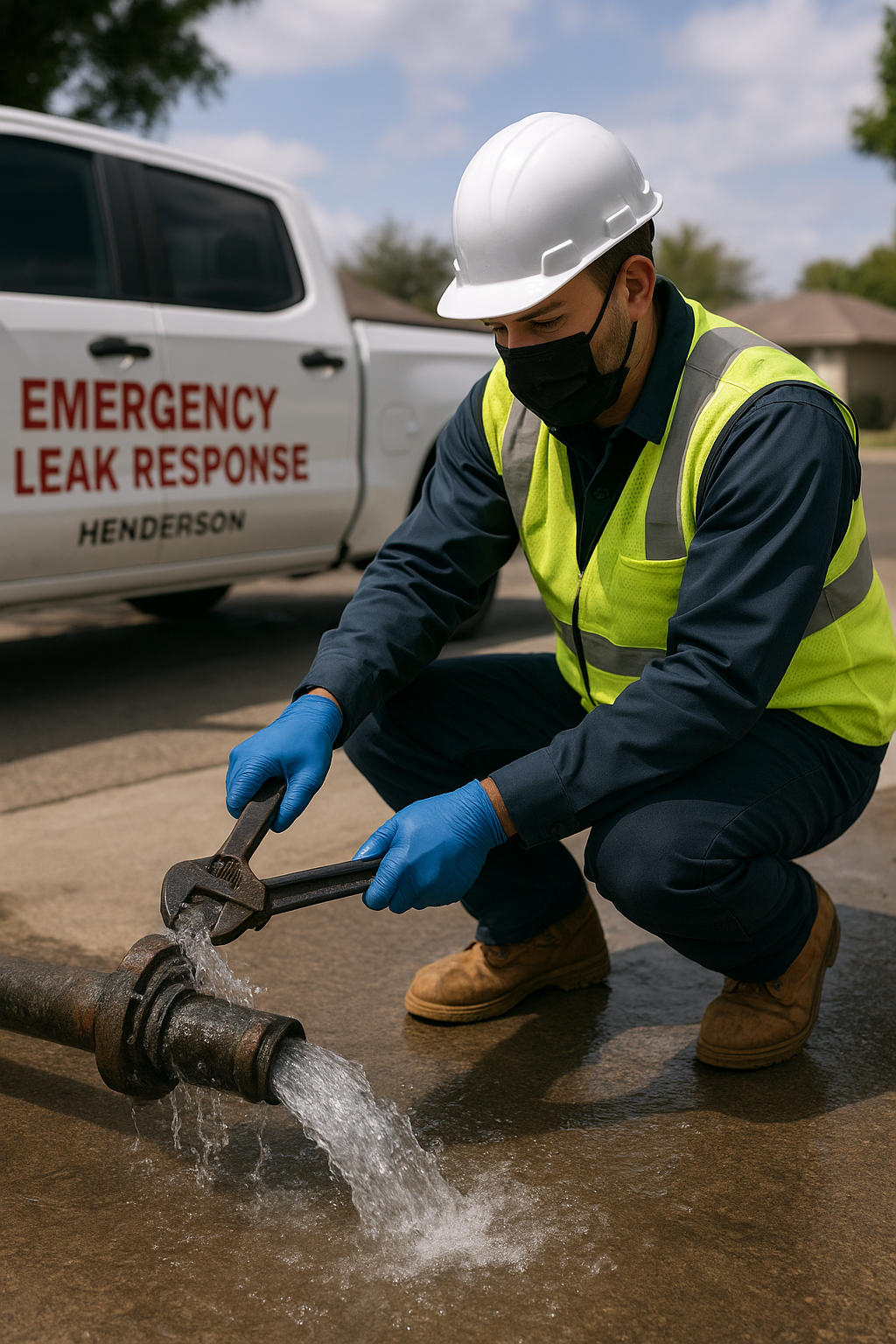
Henderson homes built in Green Valley, Sunridge Heights, and Roma Hills during the 1980s through early 2000s frequently contain polybutylene or galvanized supply lines that fail from repeated thermal expansion and hard-water scaling. When a leak surfaces, the priority is immediate water shutoff followed by pressure testing to determine whether the failure is isolated or systemic. Slab leaks common in these tracts require electronic listening devices and camera scoping because excavation without precise location mapping quickly escalates restoration costs.
Desert heat cycling accelerates joint degradation in attic and wall runs while undetected moisture under tile or carpet can promote mold within 48 hours. Technicians must distinguish between a single fitting failure and widespread material fatigue before recommending any temporary patch. Local building practices in Seven Hills and Silver Springs often route lines through narrow chases that limit access, so exploratory openings are kept minimal until the full scope is mapped.
Code requirements in Henderson mandate that any repaired section tied into an existing system must meet current pressure and material standards, which usually rules out simple splicing of obsolete pipe. Emergency response therefore includes a written scope that separates immediate containment from the longer-term repipe plan most homeowners ultimately select. Documented photos and pressure readings protect both parties when insurance adjusters later review hidden damage claims.
Technician insight
In Henderson, the thing that catches most people out with Emergency Leak Response is how fast a pinhole in 1990s polybutylene under a MacDonald Ranch slab turns into saturated subfloor before anyone notices; homeowners often assume one visible drip means one fix, yet the surrounding pipe is usually just as brittle from the same heat and hard-water cycle.
Green Valley Polybutylene Failure
A homeowner in Green Valley reported warm water pooling near the master bath. Pressure testing revealed a failed polybutylene elbow under the slab. The line was isolated at the manifold, moisture mapped, and the owner received a written plan to repipe the remaining original pipe rather than chase additional leaks.
Emergency Leak Response Services We Offer
✓Polybutylene Leak Isolation
Locate and shut down leaking polybutylene runs in Green Valley and Anthem homes before water migrates into walls or slabs.
✓Galvanized Pipe Emergency Shutoff
Identify corroded galvanized sections in MacDonald Ranch and Silver Springs properties and install temporary isolation valves to stop active flow.
✓Slab Leak Detection
Use acoustic and camera equipment to pinpoint leaks beneath concrete in Seven Hills and Sunridge Heights without unnecessary demolition.
✓Attic Supply Line Assessment
Inspect exposed polybutylene or galvanized lines in attics common to Roma Hills homes and secure any active drips before ceiling damage spreads.
✓Hidden Moisture Mapping
Deploy moisture meters and infrared imaging in Green Valley Ranch homes to document water migration behind drywall or under flooring.
Emergency Leak Response Cost in Henderson, NV
| Service | Typical Range | What Affects It |
|---|---|---|
| Diagnostic Visit | $225–$375 | Higher end for evenings, weekends, or distant tracts like Inspirada |
| Temporary Isolation Valve | $350–$650 | Depends on pipe material and accessibility in attic or slab |
| Slab Leak Location Only | $450–$750 | Includes acoustic and camera work; excavation billed separately |
| Moisture Mapping Add-On | $175–$300 | Infrared and meter readings for insurance documentation |
Ranges are typical for Henderson, NV and confirmed with an exact written quote before any work starts.
How it works
- 1
Initial Call and Dispatch
Gather address details and symptoms, then route the nearest technician to the Henderson neighborhood within the agreed response window.
- 2
On-Site Water Shutoff
Locate the main valve or install a temporary isolation point to stop flow while the leak source is traced.
- 3
Diagnostic Testing
Perform pressure checks, acoustic listening, and visual inspection to determine whether the failure is localized or part of broader line degradation.
- 4
Scope and Next-Step Recommendation
Provide written findings with photos and outline options for immediate containment versus full repipe planning.
Pricing
Diagnostic visits carry a set fee; additional costs rise with slab access, after-hours timing, or multiple leak sites.